
Knox County Arrest Warrants Explained
An arrest warrant is a signed order. It tells an officer to bring a named person before the court. Before signing one, a magistrate reviews a sworn complaint or affidavit. The question is probable cause, a legally sufficient basis tying the person to an offense. Which court issues it depends on jurisdiction. Serious felony matters go through the 50th Judicial District and the County and District Clerk. In Knox County, County Court, JP, and municipal magistrates handle the matters Texas law allows them to.
Knox County Arrest Warrant Elements Under Chapter 15
Chapter 15 of the Texas Code of Criminal Procedure spells out what a warrant must contain. It runs in the State's name. It directs a peace officer, commands that the accused be brought before the proper authority, and names or describes the person. It also states the offense and carries the magistrate's signature and office. Those are statewide rules, not a Knox County form. The county publishes no local warrant format and no public arrest-warrant form. Read Chapter 15 of the Texas Code of Criminal Procedure.
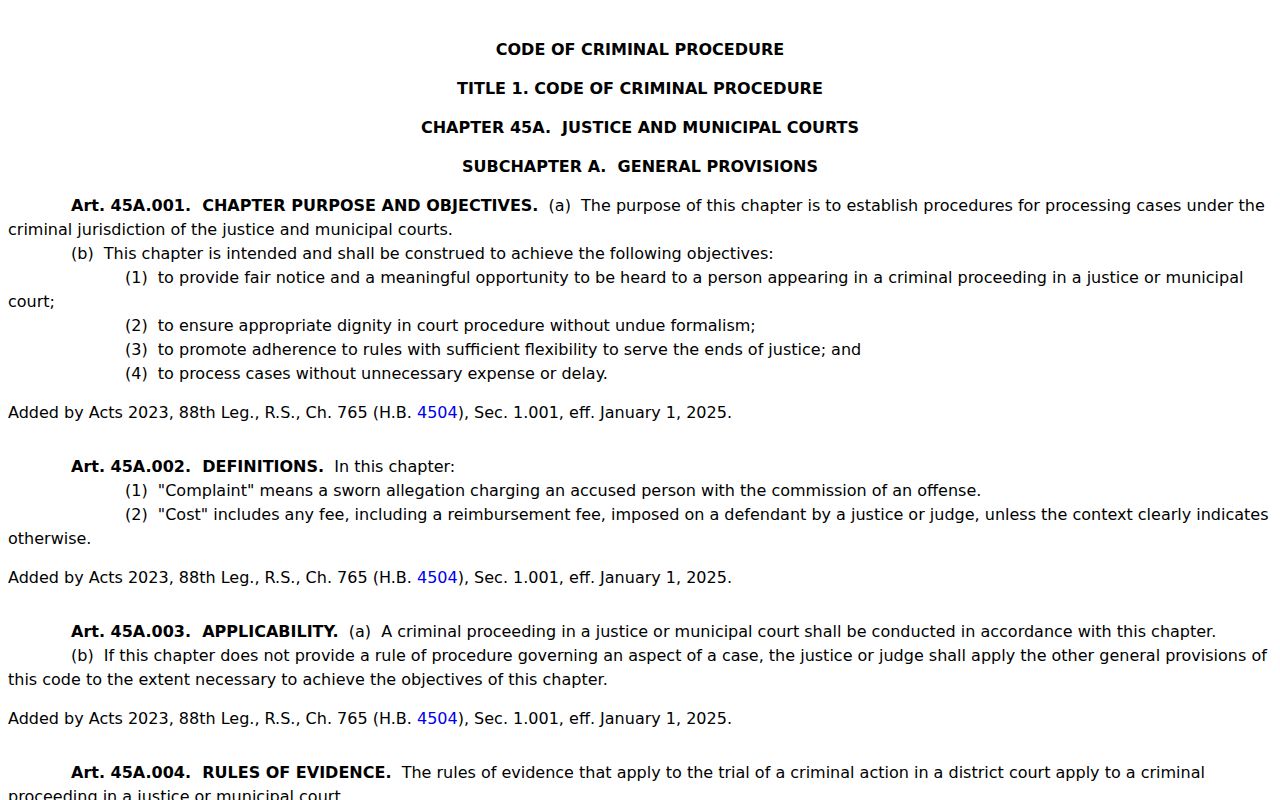
The statutory schema shows required elements without exposing a private person's warrant.
Inside a Knox County Arrest Warrant
Use the field list as questions for the issuing court about your own case. Knox County has published no local display format or warrant-number pattern. The statute fixes the basic document elements, and the court file may also hold related case references plus later service or return notes.
| Warrant number | Local format not published; ask whether it differs from the cause number. |
|---|---|
| Named person | Name or description identifies the person, subject to access limits. |
| Offense | The stated charge or offense connected to the sworn complaint. |
| Issuing authority | Magistrate's name, office, and court control the process. |
| Bond and date | Ask the court or jail for current bail terms and issue date. |
Knox County Courts Issue Different Process
Knox County runs several court layers. The 50th Judicial District Court is the felony trial court. The Constitutional County Court holds county-level criminal jurisdiction, while the JP and municipal courts take eligible Class C, traffic, and ordinance cases. The Texas Courts trial-court overview describes those levels, but only a local clerk can match a name to a specific file. The official 50th District Judge contact page gives the district court route, and the combo clerk at (940) 459-2441 keeps the county and district court records.
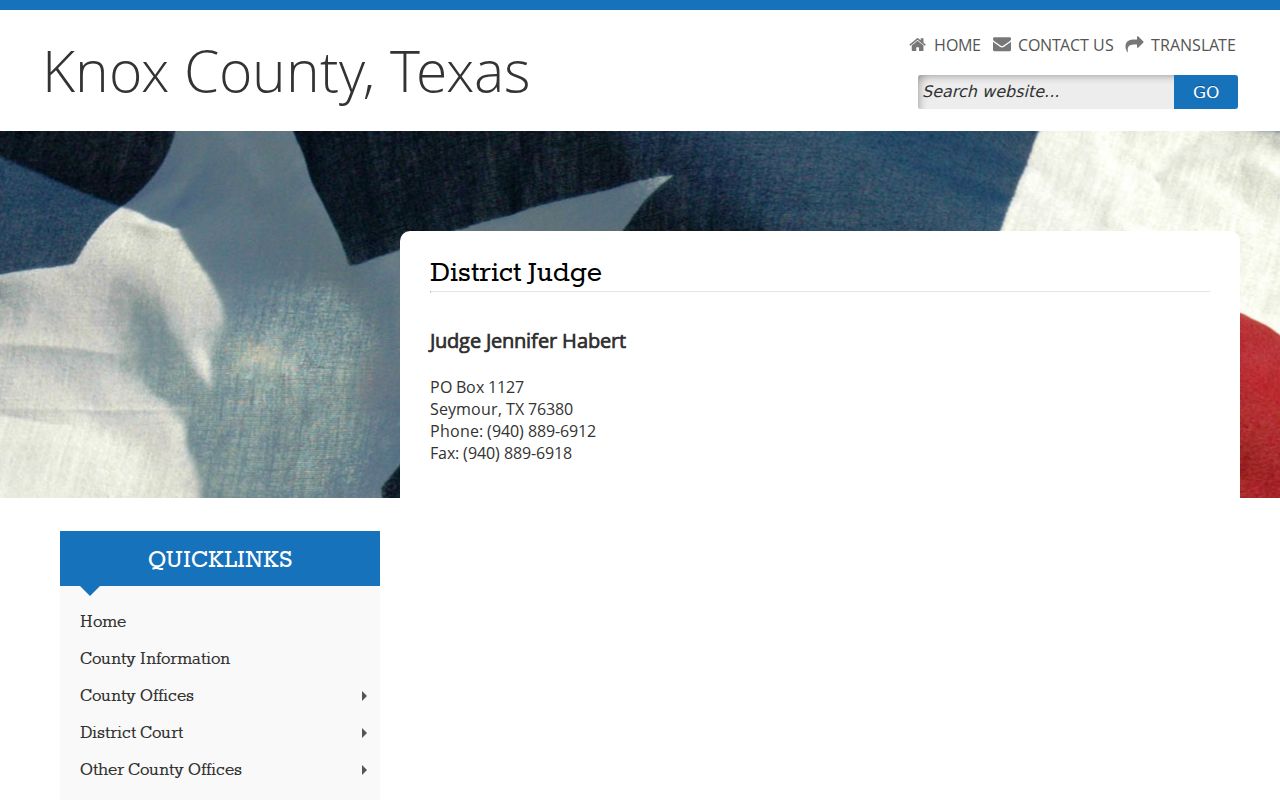
The judge's posted office contact sits in Seymour, though the courthouse and local case contact are in Benjamin.
Serving Arrest Warrants in Knox County
The sheriff's contact page never says which agency serves each warrant, and it names no warrant division. Ask the issuing court instead. Find out whether the process went to the sheriff, a constable, a municipal peace officer or marshal, or some other authorized officer. Do not assume the county sheriff serves every city warrant, because Texas Chapter 45A lets a city peace officer or marshal serve municipal process. After an arrest, the person goes before a magistrate, who handles bail under Chapter 17. Ask the jail or the court for current instructions. Guessing where to report helps no one.
Knox County Arrest Warrants and City Service
Texas law gives municipal peace officers and marshals a real role in serving municipal process. Knox City posts a police contact page, and Munday's official department page describes its police department. Neither page lists warrant service assignments. For a city case, ask the municipal court which officer or agency received the process and where a person should report. The county sheriff stays a custody fallback, not proof that it owns the city-court record. The Texas trial-court overview explains municipal court jurisdiction.

Jurisdiction tells you which Knox County court may act; it does not hand every local warrant to one serving agency.
Comparing Arrest, Summons, and Bench Warrants
A summons just orders an appearance. An arrest warrant commands an officer to take a person into custody. A bench or FTA warrant usually follows a missed obligation inside an existing Knox County case. Texas also uses a capias as another enforcement writ, and capias pro fine handles fine and cost collection after judgment.
| Feature | Arrest Warrant | Summons | Bench Warrant |
|---|---|---|---|
| What it orders | Take the accused into custody | Appear before a court | Take a person into custody after a missed duty |
| Basis | Sworn facts and probable cause | Charge or court process | Failure to appear or comply |
| Who issues it | Authorized judge or magistrate | Court or authorized officer | Judge in the existing case |
| Response | Ask counsel and court about surrender or bail | Attend as directed | Ask the issuing court about appearance or recall |
Knox County Arrest Warrant Bail Timing
Texas Chapter 17 generally requires a magistrate to set bail without unnecessary delay, and no later than 48 hours after arrest, subject to statutory exceptions. The warrant itself may not show the final bond. Ask the jail or court which magistrate will rule and how a family member can get current information. Knox County publishes no bond schedule, no payment method, and no jail bond-window hours. Confirm the amount and the accepted form before anyone travels or sends money.
If There's an Arrest Warrant for You
Call the sheriff and the issuing court. Confirm the process, cause number, status, and bond terms. For a felony or serious matter, get a lawyer before you appear. Counsel can talk with the court about a planned surrender, a bond setting, or a motion to recall or quash where that option exists. Knox County posts no online surrender procedure and no walk-in warrant desk.
Call first. Ask where to report, what identification is needed, and whether counsel should arrange the appearance or bond.
Keep the court's written direction. Verify the docket changed after the judge acts, since a release on bond does not end the underlying case. The home page's Knox County resolution steps also cover traffic and fine-based warrants.
Important: Talk with a lawyer before arranging an appearance; confirm the issuing court, warrant status, and bond instructions before going in person.
Knox County Arrest Warrants Stop at the Federal Boundary
Federal warrants do not live in the Knox County courthouse. They belong to a separate system. The Northern District of Texas places Knox County in its Wichita Falls division, though that division's clerk work is routed to Fort Worth. So a federal arrest warrant in Knox County is still a federal court matter, not a county record. The Wichita Falls division page only shows court routing, not a public warrant list. For any federal warrant question, the right contacts are federal counsel, the federal court, or U.S. Marshals.