
Searching for a Warrant in Knox County
No official Knox County public name-search form or active roster was located. Begin with the Sheriff's Office at (940) 459-2211 and ask whether staff can confirm your own record or route you to its issuing court. The jail number, (940) 459-2041, is for custody questions; the county does not call it a warrant hotline. The sheriff page does not claim to index all city or JP process.
For district or county court case identity, call the County and District Clerk at (940) 459-2441. A county traffic matter may belong to the JP at (940) 459-3181; a city citation belongs first with the municipal court shown on the ticket. Gather your name, date of birth, citation or cause number, date, and city before calling. Share personal details with the official office only.
- Call the sheriff first for county service or custody routing, then ask which court issued the process.
- Contact the County and District Clerk for a district or county case file and its inspection rules.
- For Class C, traffic, or fine matters, ask the JP or the municipal court named on the citation.
- Use Texas DPS OmniBase for a reported failure-to-appear or failure-to-pay citation, not as a criminal-warrant index.
- If phone confirmation is not available, ask the sheriff or court how to request existing records or appear safely.
No Knox County Warrant Search Portal
The county's official sheriff page lists contacts but no name box, filters, warrant list, or update time. That absence is a useful fact about access, not proof that no warrant exists. A phone call to the Sheriff's Office can identify the next office, while the issuing court confirms case status.
The county keeps its contact route on the official sheriff page. It gives the office at 111 E Hayes Street and the jail address separately, without describing either as a public warrant counter.
Use the posted numbers to ask where a request belongs; do not treat the page as a searchable roster.
Knox County Warrant Search Fields Explained
Knox County has no published online form, so the table below is a call-preparation list, not a transcription of search boxes. Give only the details the clerk or sheriff needs to distinguish your own case. If a citation is involved, the court named on that notice is the best place to start.
| Field Label | Type | Required | Notes |
|---|---|---|---|
| Full legal name | Verbal or written | Not published | Use the name on the citation or court file. |
| Date of birth | Verbal or written | Not published | Can help distinguish people with similar names; do not post it online. |
| Cause or citation number | Verbal or written | Not published | Have the notice nearby; the two number types may differ. |
| City or precinct | Verbal or written | Not published | Helps route a city ticket to municipal court or a county matter to JP. |
| Process type | Confirmed by court | Not applicable | Ask whether it is FTA, arrest, bench, capias, or capias pro fine. |
Knox County Warrant Questions Cross Court and Sheriff Files
The sheriff handles law-enforcement records and may route service or custody questions. The District and County Clerk handles judicial case files, and the JP keeps lower-court case details. City municipal courts keep their own traffic and ordinance records. A request sent to one office may not reach another court's file.
The clerk page publishes a first-floor courthouse contact and general filing fees, but no online warrant lookup. For judicial records, call (940) 459-2441 and ask how the court permits inspection or copies.
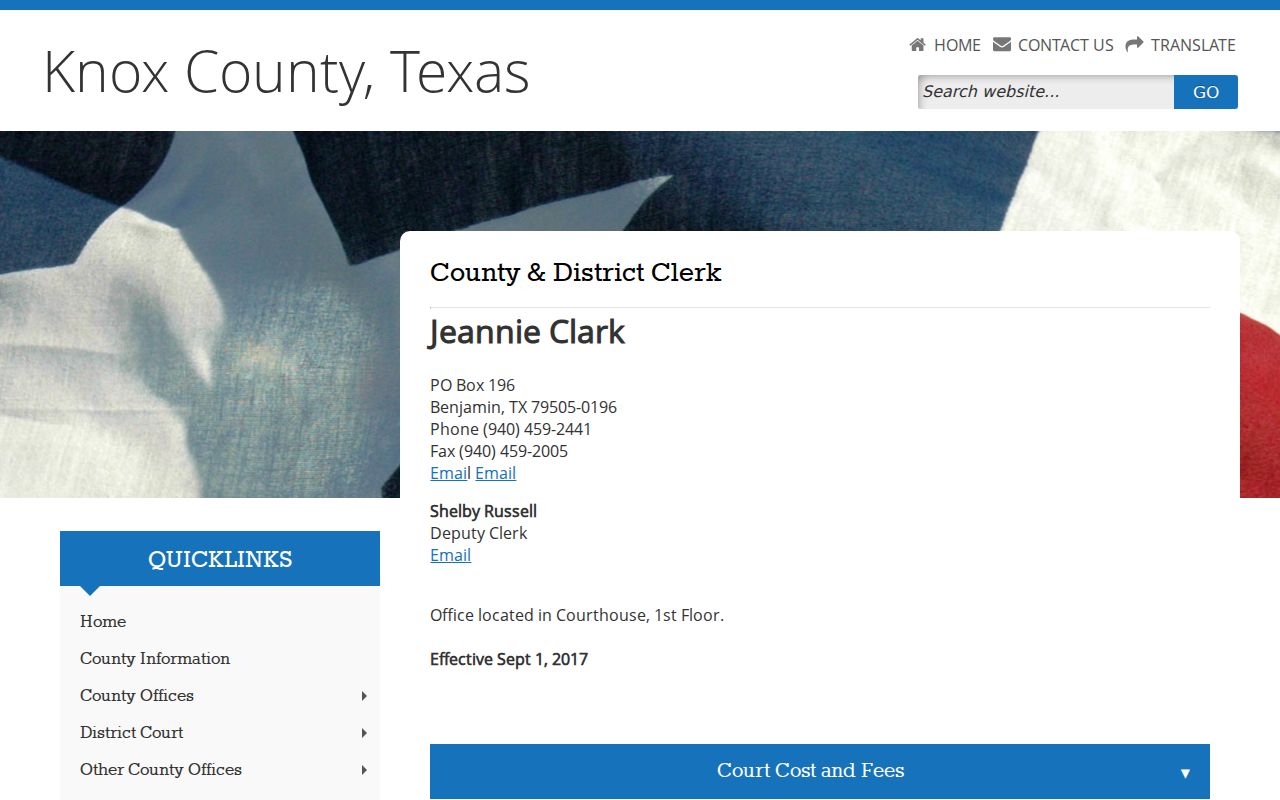
The clerk's office is the records contact for district and county files, not a public sheriff database.
Knox County Warrant Searches Show These Case Details
Because Knox County publishes no warrant entry, these are fields to ask an office to confirm, not results from a local portal. Start with the court and cause number, then clarify the process label, status, and what the court expects next. A warrant number may be separate from the underlying case number.
| Warrant identifier | Local format not published |
|---|---|
| Charge or reason | Offense, missed setting, unpaid fine, or other stated basis. |
| Issuing court | District, County, JP, or municipal court controlling the file. |
| Bond and conditions | Ask the court or jail for current terms; no county schedule was located. |
| Status | Confirm whether active, served, recalled, returned, or satisfied. |
Knox County Warrant Name Matches Need Context
A name alone may not identify one file. Give the clerk a date of birth and cause or citation number when available, then ask the clerk to repeat the court and case number so the next call goes to the right place. The research found no county search form with published matching rules.
Do not rely on an online result from a third party as confirmation. A court or sheriff can explain what record it has and whether personal details can be released.
Where Knox County Warrant Questions Start
For county-held service or custody information, call the Sheriff's Office. District and County Court files go through the combo clerk; traffic and fine-only matters go to the JP or the city court that issued the citation. Knox City and Munday have current directory contacts, while Benjamin and Goree details require verification with the city or courthouse.
Texas has no single public statewide criminal-warrant search. DPS OmniBase reports certain FTA or FTP citations and license-renewal holds; it does not cover every criminal warrant. Ask the issuing court even when DPS shows no citation notice.
Knox County OmniBase Is Not a Warrant Index
Texas DPS directs a person with an FTA or FTP notice to contact each reporting court about amounts, appearance rules, and payment arrangements. Its program is a citation-compliance channel, not a statewide public criminal-warrant roster. More than one court may have reported a ticket.
The Attorney General's written-request guidance explains how to seek existing public records when a direct status call is not enough.
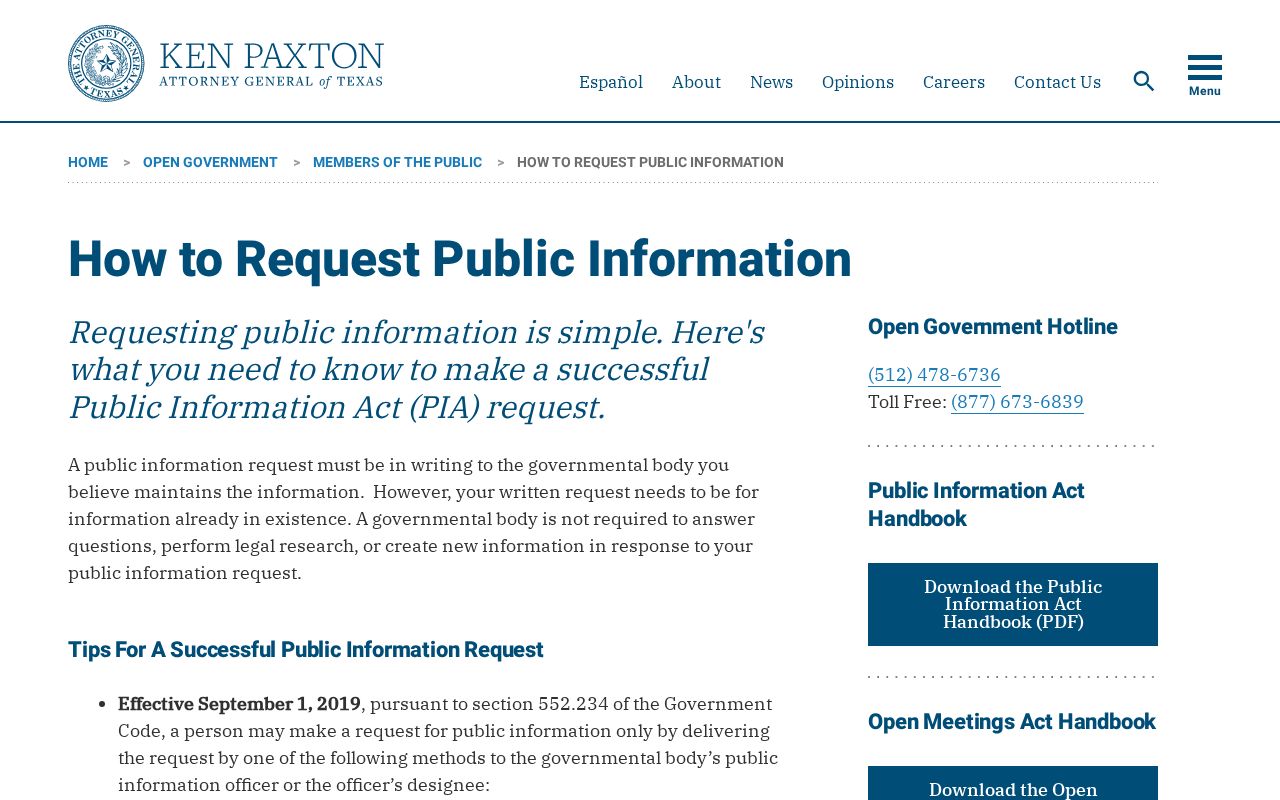
For a court's own file, use the clerk's record-access rules instead of labeling the request a PIA submission.
Knox County Warrant Requests Must Name Existing Records
A written public-information request should identify an existing record and go to the governmental body that holds it. The sheriff, a city police department, and a court clerk do not keep one shared file. Court case records follow a separate judicial-access route, so ask the clerk about inspection or copies instead of treating every docket as a PIA record.
The Texas Attorney General’s request guide explains the response steps when a governmental body has the record or believes an exception applies. A request cannot require an office to create a new warrant roster.
Knox County Warrant Access Has Legal Limits
Public access depends on the record and the office that keeps it. Texas law allows exceptions for some law-enforcement information; juvenile, sealed, personal, and active-investigation material may be limited. Search-warrant affidavits have their own access timing after execution. Ask the clerk or sheriff what may be released and what rule controls.
Key Rules:
The Texas Public Information Act covers government-held records but has exceptions, including some law-enforcement material.
Judicial records are outside the PIA. Ask the court clerk about inspection, sealed files, and juvenile access.
No search result from one source does not prove that no warrant exists in another court or system.